The S&P 500 Just Had Its Worst Week Since the April 2025 Tariff Crash
Nov 7, 2026 8:33 PM
· YahooFinance
A fourth straight weekly loss looks bad, but the S&P 500's record rests on a technicality, and the real damage hit one corner of the market. With CPI and NVIDIA earnings looming, your index fund may own more of that…
Building a portfolio and living off one are two completely different skills, and almost nobody teaches the second. This problem is what The Definitive Guide to Retirement Income helps, and it is free today. Read more here. (Sponsor)
This post may contain links from our sponsors and affiliates, and Flywheel Publishing may receive compensation for actions taken through them.
The S&P 500 closed Friday, November 6, 2026, at 7,376.86, down from 7,580.07 a week earlier. That 2.68% fall was its worst Friday-to-Friday week since the week ending April 4, 2025, when the tariff crash drove a 9.08% correction.
The index has now fallen for the fourth straight week. The State Street SPDR S&P 500 ETF Trust (NYSEARCA:SPY) lost 2.7%, moving from $755.72 to $735.29.
Intel Implodes and Google Crashes: Is it Time to Abandon AI Stocks or is the Market Overreacting?
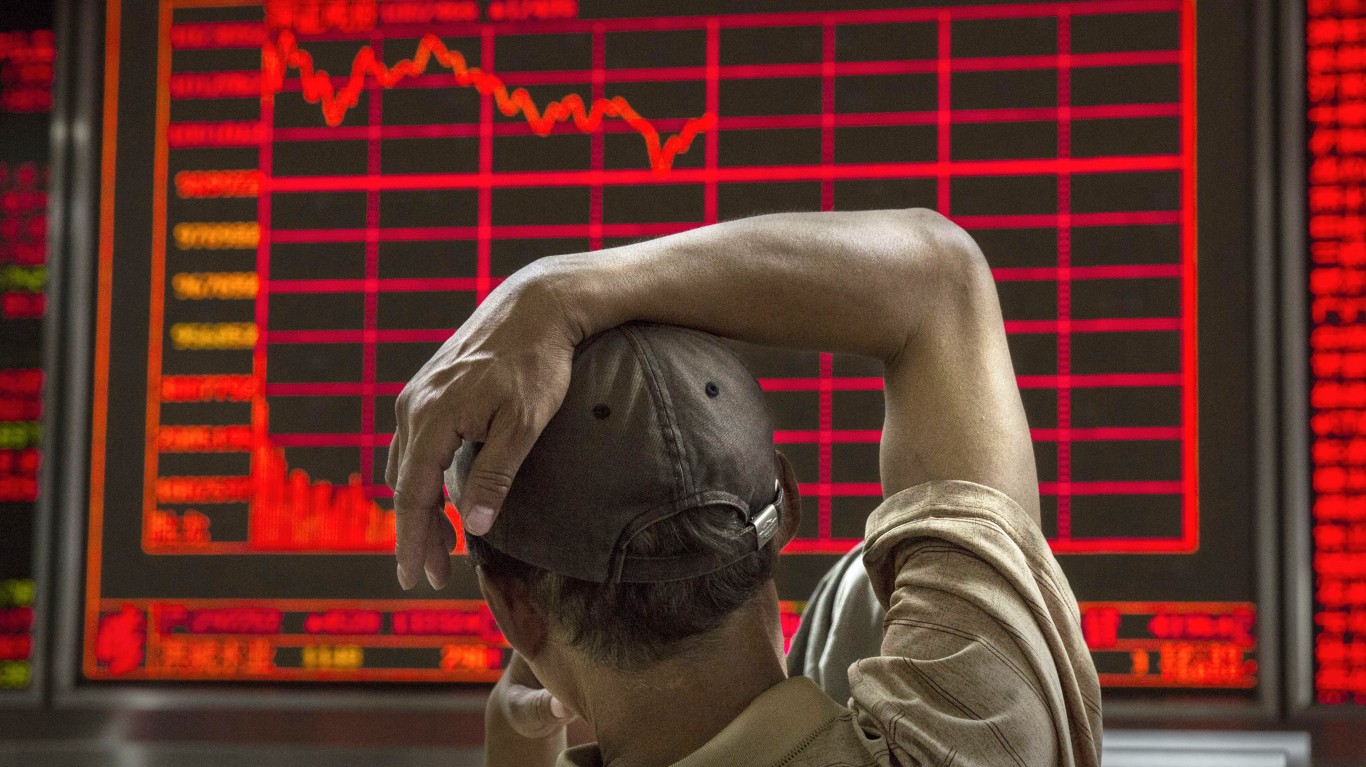
Most of the damage came on Thursday, November 5. Midterm results set off heavy selling in AI stocks, and the S&P 500 fell 4.36%, its worst day since the April 2025 crash.
The two weeks differ greatly in size. In the April 2025 week, the index fell from 5,580.94 to 5,074.08, a much steeper drop.
The November 6 week set the mark only because the two closest weeks since then just missed it: the week ended May 23, 2025 at -2.61% and the week ended June 5, 2026 at -2.59%.
The losing streak started small. The index fell 1.95%, 0.47% and 0.57% in the weeks ended October 16, 23 and 30. It now sits 5.65% below its October 6 record close of 7,818.93.
Only the S&P 500 can claim the worst-since record. The Nasdaq Composite fell 3.37% for its own fourth straight weekly loss. However, the week ending October 16 was worse for both the Composite, at -4.48%, and the Nasdaq-100, at -5.49%.
The PHLX Semiconductor Index fell 12.15%, from 10,688.80 to 9,390.25. The Technology Select Sector SPDR (NYSEARCA:XLK) fell 7%, and the SPDR energy sector fund fell 11%.
The Dow, which the SPDR Dow Jones Industrial Average ETF Trust (NYSEARCA:DIA) tracks, fell just 0.94% to 51,285.73. On Friday, the Dow lost 237.33 points, or 0.46%, while the S&P 500 rose 0.31% and the Composite gained 1.09%. That split shows the losses were concentrated in AI hardware and energy and did not spread across the wider market.
The Invesco QQQ Trust (NASDAQ:QQQ) fell 4.98% to $656.10. SPY fell less, but it still carries much of the same risk.
As of SPY’s March 2026 fact sheet, NVIDIA (NASDAQ:NVDA | NVDA Price Prediction) by itself made up 7.58% of the fund. The S&P 500 weights each company by its market value, so the AI stocks that pulled the Nasdaq-100 lower also have a large effect on a fund many investors consider “diversified.”
All of that AI expansion still has to be powered and cooled by someone, and we featured seven of those suppliers in a free report.
Employers added 165,000 jobs in October, far above the expected 65,000. September’s gain was revised to 60,000, and unemployment fell to 4.1%. Traders raised the odds of a December rate hike to 78% from 70%.
Strong hiring can keep wage growth, and with it inflation, running hot, and that gives the Fed a reason to raise rates. Higher rates lower what investors will pay today for profits expected years from now, and highly valued tech stocks depend most on those future profits.
October’s consumer price index (CPI), the main inflation report, comes out Tuesday, November 10, at 8:30 a.m. ET. NVIDIA reports fiscal third-quarter results after the close on November 17. A hot inflation number would make a hike more likely, while strong NVIDIA guidance could help steady chip stocks.
Keith Lerner, chief investment officer at Truist Advisory Services, said AI is still the main theme of this bull market and the selloff likely offers a longer-term buying opportunity. Adam Turnquist, chief cross-asset strategist at LPL Financial, called the week a knee-jerk reaction to the midterms.
SPY’s longer-term trend remains intact. The fund is still up 7.83% for the year, and a slow fall after a run to records looks like an ordinary pullback in a rising market.
Investors exploring ways to reduce AI concentration can compare an equal-weight S&P 500 fund. It gives NVIDIA the same weight as every other company in the index, so swings in chip stocks move it less.
This view would weaken if the S&P 500 closes November 13 below 7,376.86, a fifth straight weekly loss, and NVIDIA’s report fails to stop the fall.
Contact [email protected] for any questions or corrections.
Omor Ibne Ehsan is a writer at 24/7 Wall St. He is a self-taught investor with a focus on growth, cyclical, and dividend equities that have strong fundamentals, value, and long-term potential. He also has an interest in high-risk, high-reward investments such as penny stocks.
Sentiment improved for almost everyone except the households holding the most stock, and a survey that closed days before a brutal selloff may already be out of date. What do those wealthy investors see…
A post-election rally vanished in a single session, and the market's fear gauge jumped almost 70%. Three theories claim to explain the rout, but each one leaves a gap that the bond market and…
October cracked open a rare divide between the S&P 500 and the typical stock inside it, a gap not seen in over 15 years, and now investors face a decision before NVIDIA reports and…
Fundstrat's Tom Lee says institutional investors have circled a specific date on their calendars before they commit new money to this battered market, and it has nothing to do with earnings season.
Chip stocks just suffered one of their ugliest stretches on record, and a political shift in Washington may be to blame. History offers a surprising clue about what happens next, but a November 17…
Relief, cheaper oil and a calmer VIX sent Wall Street soaring after the midterms, yet no major index hit a record, and one fund quietly did. Which one reveals the rally's real story, and…
Stocks shrugged, Treasuries barely twitched, and yet the two-year yield told a different story. One hot jobs print has Fed watchers rethinking December, and the next CPI release could decide whether SPY holds its…
Chip stocks cratered, the Nasdaq-100 crossed a line it has not crossed all year, and one portfolio manager says the AI trade just entered a dangerous new phase that separates believers from skeptics.
One brutal session erased roughly $450 billion from NVIDIA and knocked its CEO down the wealth rankings. Wall Street is pricing in an AI slowdown that no reported number confirms, and a single earnings…